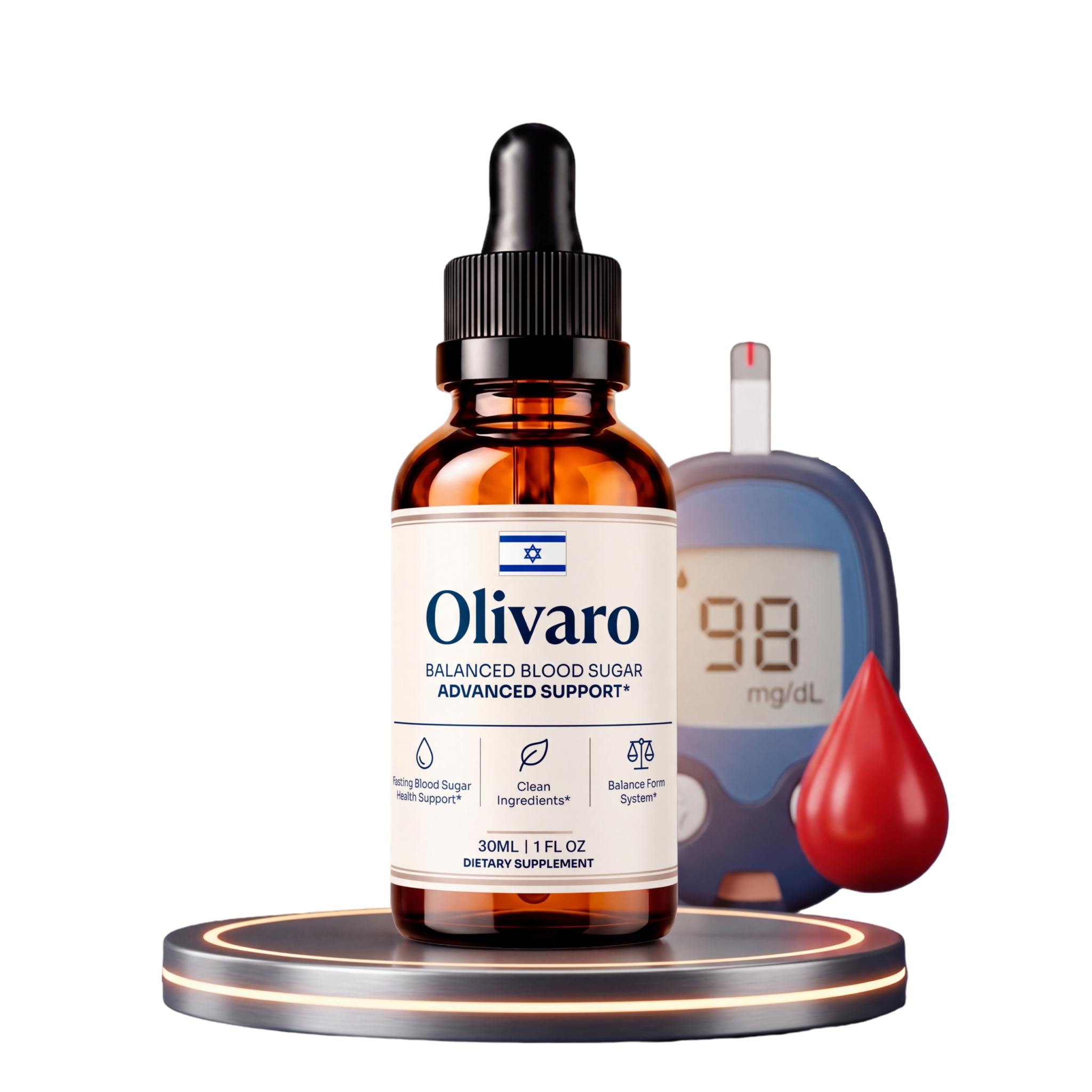
What's Behind the Olivaro Formula?
When someone looks for a supplement to support healthy blood sugar levels, it's easy to fall into a common trap.
You look at the packaging, recognize a few familiar ingredients, and quickly conclude that the product looks good.
But that's not how a formula should be evaluated.
One ingredient may have a particular role, while another may work through a completely different pathway. And when several components are combined, what really matters is understanding the logic behind that combination.
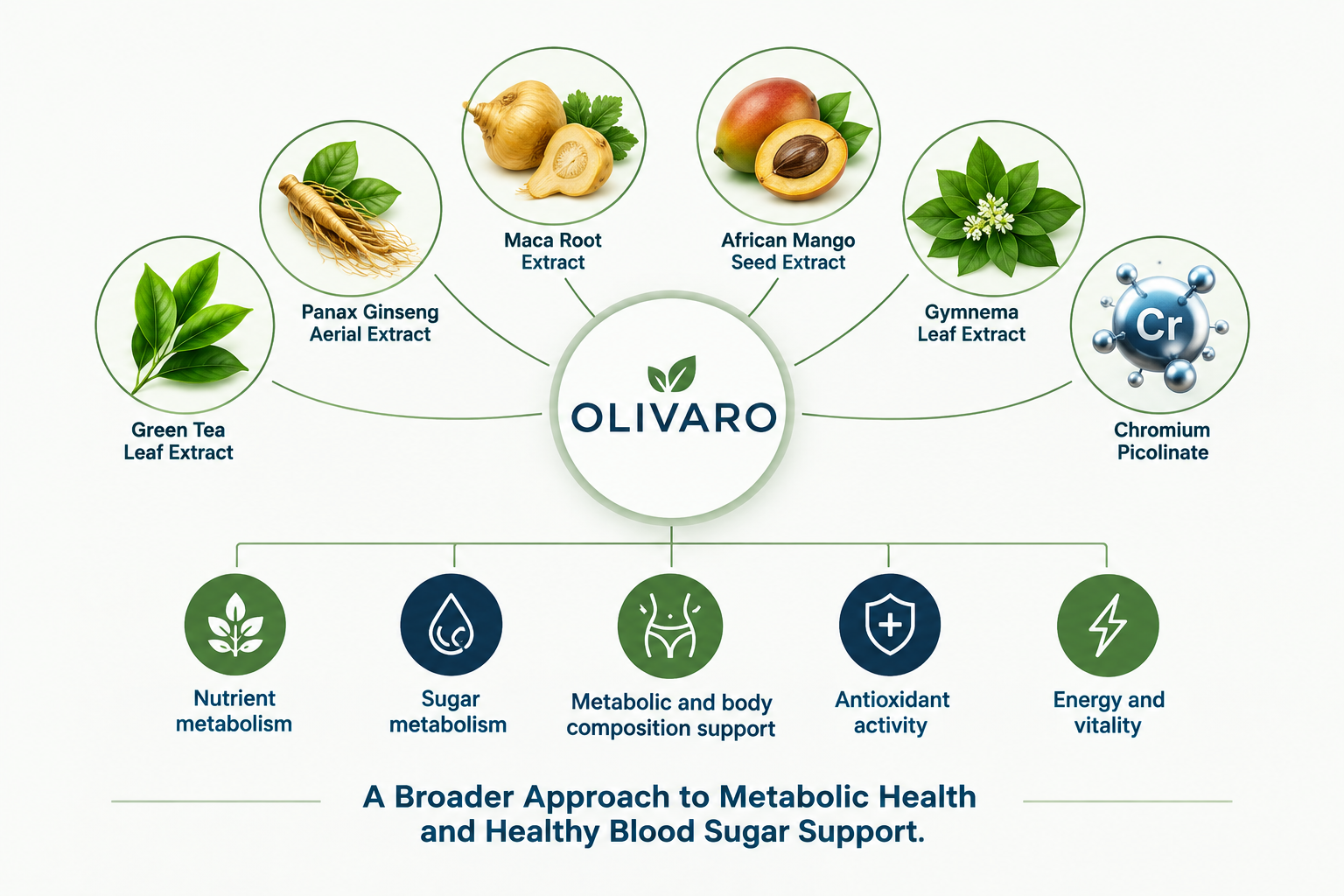
In Olivaro's case, we find a formula made up of six components selected as part of an approach focused on metabolic health and support for healthy blood sugar levels.
Some of them are quite familiar.
Others, however, may be less familiar to people who are just beginning to research this subject.
So instead of simply listing their names and calling them "powerful," let's examine each component individually and understand why it's included in the formula and what it may contribute to Olivaro's overall approach.
This is where we begin to explore whether there is a real strategy behind the product—or simply a list of ingredients chosen to look impressive.
1. Chromium Picolinate
Chromium is a mineral involved in processes related to the metabolism of carbohydrates, fats, and proteins.
Chromium Picolinate is a form of chromium commonly used in supplements focused on metabolism and the maintenance of healthy blood sugar levels.
Its presence in Olivaro's formula fits the product's stated purpose because the goal isn't simply to eliminate sugar from the diet, but to support the processes involved in how the body handles nutrients.
And this is just the first component.
2. Gymnema Leaf Extract
Gymnema is a plant traditionally used in health practices, particularly in contexts related to glucose metabolism and cravings for sweet foods.
This ingredient stands out because it adds a different approach to the formula.
While chromium is associated with metabolic processes, Gymnema is known primarily for its traditional use in connection with sugar metabolism and the perception of sweet taste.
This helps explain why it appears alongside the other components in Olivaro.
3. African Mango Seed Extract
African Mango, known as Irvingia gabonensis, is another ingredient that may be unfamiliar to the average consumer.
Its extract has been studied in relation to metabolism and body composition, which fits the broader approach of supporting metabolic wellness.
Here, once again, we can see that the formula isn't focused on just one aspect.
The apparent intention is to address different areas related to metabolism within a single daily routine.
4. Green Tea Leaf Extract
Green tea is probably the most familiar ingredient on this list.
In addition to its long history of consumption, its natural compounds have been widely studied for their antioxidant properties and their relationship with metabolic processes.
Its inclusion adds another element to the formula: antioxidant support in the context of metabolic health.
This is relevant because metabolic health doesn't depend on a single factor.
5. Maca Root Extract
Maca is a root traditionally used as a food and supplement, particularly in connection with energy, vitality, and general well-being.
Within Olivaro, its presence helps broaden the formula's approach beyond blood sugar alone.
The idea is to offer a combination that also considers aspects related to energy and overall well-being, rather than concentrating the entire formula on a single purpose.
6. Panax Ginseng Aerial Extract
Finally, we find Panax Ginseng.
Ginseng is one of the best-known plants when it comes to vitality and stamina, and its natural compounds are studied in different contexts related to metabolism and well-being.
Its presence completes the formula with another component traditionally associated with energy and the body's ability to adapt to different demands.
And here's a point I find more interesting than simply counting how many ingredients are included.
Olivaro doesn't rely on a single ingredient to support its overall approach.
It brings together components with different histories of use and different areas of interest related to metabolism.
But this still doesn't answer the most important question.
Does this combination actually make sense as a whole?
Because six individually interesting ingredients don't necessarily make a good formula.
The way they complement one another may be what makes all the difference.